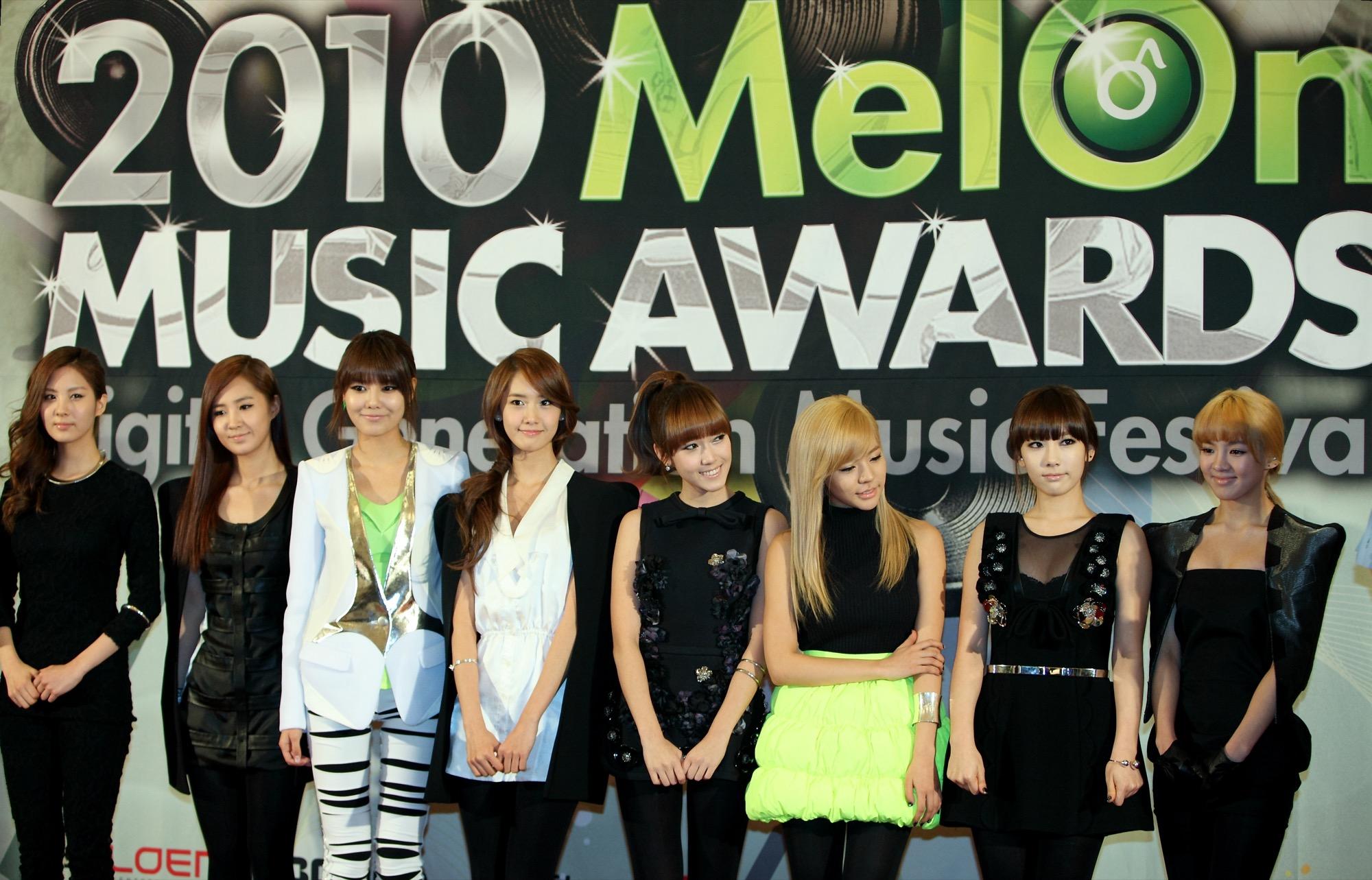
In January 2009, nine young women in skinny jeans and bright T-shirts released a song about a crush so overwhelming it left them stammering. The chorus was barely a word: Gee, gee, gee, gee, baby, baby, baby. Within weeks it was everywhere in South Korea, in cafés, subway stations, school hallways, and phone commercials. It held number one on KBS's Music Bank for nine consecutive weeks, a record no song would break until "Gangnam Style" in 2012.
The group was Girls' Generation, known in Korean as Sonyeo Sidae and to fans everywhere as SNSD. Over the next decade they became something rarer than a successful pop act. They became, in the words of their home country, "The Nation's Girl Group."
This is the story of how they got there, what that popularity was worth, and what happened when the machine that built them finally began to slow down. It is a story about money and fame, but also about something that outlasted both.
Built Before They Were Born as a Group
Girls' Generation did not appear overnight. Their label, SM Entertainment, spent years assembling them. Jessica was the first to enter SM's training system, in 2000, after she and her younger sister Krystal were scouted in a shopping mall during a family vacation. Sooyoung and Hyoyeon came in through an open audition that same year. Yoona reportedly went through around two hundred auditions for music videos, dramas, and films before landing her place. Seohyun, the youngest, was spotted by a scout on the subway.
By the time the group debuted on August 5, 2007, performing "Into the New World" on SBS's Inkigayo, some of its members had been training for most of a decade. The lineup was nine: Taeyeon, Jessica, Sunny, Tiffany, Hyoyeon, Yuri, Sooyoung, Yoona, and Seohyun.
Nine was an unusually large number for a girl group, and it became part of the appeal. Fans could choose a favorite, argue about it, and follow each member's personality across variety shows, radio, and dramas. The group was not just a sound. It was a cast.
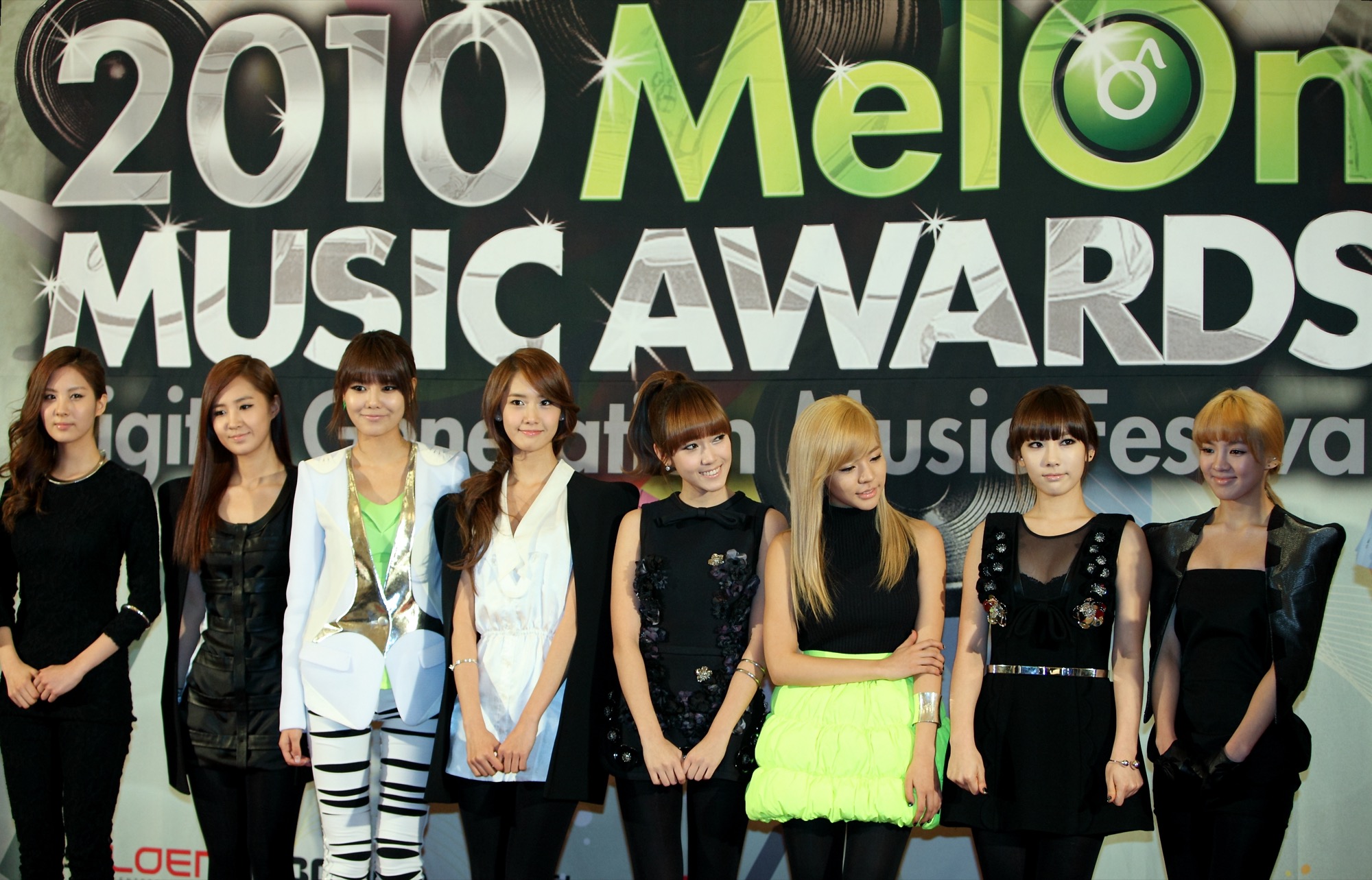
Girls' Generation at the 2010 Melon Music Awards. Photo: KIYOUNG KIM, CC BY 2.0, via Wikimedia Commons.
The Gee Years
"Gee" changed everything. It was the best-selling single of 2009 in South Korea, and the music platform Melon later declared it the Song of the Decade. In 2023, Rolling Stone went further and named it the greatest song in the history of Korean pop.
The hits kept coming. "Genie" followed in 2009. In 2010, "Oh!" topped the Gaon Digital Chart and sold more than 3.3 million digital copies, followed by "Run Devil Run" and "Hoot." Girls' Generation won Artist of the Year at the Seoul Music Awards in both 2010 and 2011, the first girl group to do so, and became the first female act to win the Album Daesang at the Golden Disc Awards.
In 2011 their third Korean album, The Boys, was the best-selling album of the year in South Korea, selling more than 460,000 copies. In 2013, the video for "I Got a Boy" won Video of the Year at the first YouTube Music Awards. By then they had become the first Asian girl group with five music videos past 100 million views on YouTube: "Gee," "I Got a Boy," "The Boys," "Mr. Taxi," and "Oh!"
Conquering Japan
If Korea made Girls' Generation stars, Japan made them a business empire.
The group signed with a division of Universal Music Japan in 2010 and played its first Japanese showcase that August to 22,000 fans. Their Japanese version of "Gee" reached number two on the Oricon Singles Chart, making them the first non-Japanese girl group to enter the top three since 1980.
Their self-titled Japanese album, released in June 2011, topped the Oricon Albums Chart, the first album by a foreign girl group to do so. It sold 500,000 copies in its first month and eventually more than 871,000, and became the first album by a South Korean girl group to be certified million. The group appeared on NHK's Kōhaku Uta Gassen, Japan's most prestigious year-end music show. In all, their three Japanese concert tours drew a record-breaking 550,000 spectators.
The Japanese business magazine Nikkei Business suggested their international success was the musical equivalent of Samsung's global rise. It was not an exaggeration.
What the Legend Was Worth
Popularity on that scale turned into serious money.
Between 2009 and 2011, according to reporting compiled on Wikipedia, Girls' Generation generated ₩68.8 billion (about $62 million) and earned roughly $20 million in profits, making them the highest profit earner for SM Entertainment. Their first Japanese arena tour alone, in 2011, drew 140,000 people and generated an estimated ₩20 billion in sales.
Then there were the endorsements. In 2009, the popularity of "Gee" helped the group generate ₩1.5 billion (about $1.2 million) in endorsement revenue. Over the following years they appeared in more than forty endorsement deals, including LG, Intel, Domino's Pizza, Lotte, Casio, and the Korean chicken chain Goobne. Marketers described them as the models with the most influence over consumers, and in 2011 and 2012 the members combined shot more commercials than any other celebrities in South Korea.
By 2012 they had sold more than 30 million digital singles and 4.4 million physical albums, making them one of the best-selling acts in Korean history. That same year, they became the first celebrities to appear on official postage stamps issued by Korea Post.
Their cultural reach matched the revenue. CNN called them a "national phenomenon" and the "Asian version" of the Spice Girls. The Financial Times columnist Tyler Brûlé named them one of the ten most recognizable features of South Korea in 2011, the only musical act on the list. They ranked in the top five of Gallup Korea's Singer of the Year poll every year from 2007 to 2016, topping it three years running from 2009 to 2011.
The Limits of Conquest
Even legends have limits. In 2012, SM pushed Girls' Generation toward the American market. The Boys was released in the US through Interscope Records, and the group performed on Late Show with David Letterman and Live! with Kelly. The results were modest: the album entered Billboard's Top Heatseekers chart at number 17 and sold 21,000 copies. A decade before BTS and BLACKPINK broke through in America, the door was not yet open.
At home, the industry was changing too. New groups arrived every year, many of them modeled on the template Girls' Generation had created. The group kept releasing music, with Mr.Mr. in 2014 and Lion Heart in 2015, and kept charting. But the era when an entire country hummed the same chorus was passing.
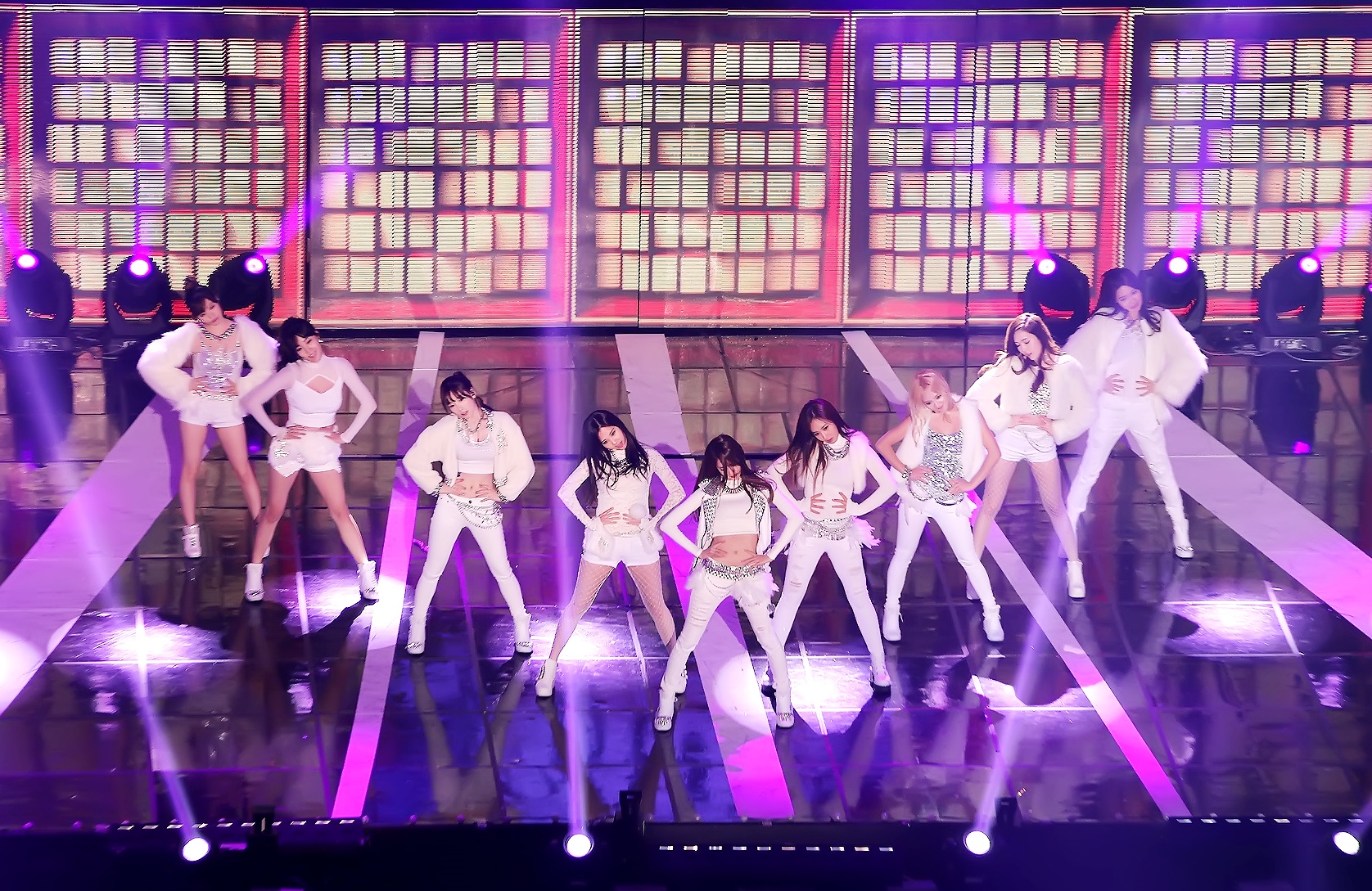
Girls' Generation, still nine members strong, performing at the Seoul Music Awards in January 2014. Photo: Sweet3Haven9, CC BY 4.0, via Wikimedia Commons.
The First Break
On September 30, 2014, Jessica announced that she had been dismissed from the group. SM Entertainment confirmed her departure, citing conflicts between her schedule and the group's. The news landed like an earthquake. That same day, at an event in Shenzhen, the remaining members were visibly emotional. The next day, leader Taeyeon apologized to fans: "From the start, we've only wanted to protect Girls' Generation ... Please believe in us one more time."
The group continued as eight. Their first release without Jessica, "Catch Me If You Can," followed in 2015, and then Lion Heart. They were still successful. But for many fans, the departure marked the end of the original story.
Ten Years and a Long Pause
In August 2017, Girls' Generation released Holiday Night to celebrate their tenth anniversary. It debuted at number one on Billboard's World Albums chart and became their fastest-selling Korean album in its first week.
Two months later came the moment many fans describe as the group's end. In October 2017, the contracts of Tiffany, Sooyoung, and Seohyun with SM Entertainment expired, and the three left the company. They did so, according to reports, on the condition that the group would remain together. Taeyeon, Sunny, Hyoyeon, Yuri, and Yoona stayed with SM.
Girls' Generation never formally disbanded. Instead, it went quiet. The members threw themselves into solo careers: Taeyeon became one of Korea's most successful solo vocalists; Yoona, Sooyoung, Yuri, and Seohyun built serious acting careers; Tiffany continued her solo music career; Hyoyeon became a DJ. By 2020, the range of their work was being cited as a model for how a veteran girl group could grow up.
So was it a demise? In commercial terms, the era of SNSD as a hit-making machine did end in 2017. Their decade at the top of K-pop's economy, the record runs, the arena tours, the forty-plus endorsements, was over. But something else did not end.
The Reunion
In September 2021, all eight members appeared together on the variety show You Quiz on the Block, their first group activity in four years. In May 2022, SM announced a full-group comeback for the group's fifteenth anniversary, with the three members who had left the label returning to take part.
Their seventh Korean album, Forever 1, was released on August 5, 2022, fifteen years to the day after their debut. It peaked at number two on the Circle Chart, and its title track became the group's first top-five single in six years. They performed at SM Town Live that month and held a sold-out fan event, "Long Lasting Love," in September.

Girls' Generation at their 15th anniversary press conference, August 2022. Photo: K-POPIT 케이팝잇, CC BY 3.0, via Wikimedia Commons.
The story keeps going. In 2024, a Gallup Korea survey found Girls' Generation tied with BLACKPINK as the most loved K-pop girl group to debut this century. In August 2026, SM launched a new sub-unit, Girls' Generation-HRS, with Hyoyeon, Yuri, and Sooyoung, born out of a comedy series on Hyoyeon's YouTube channel.
What Lasts
The Book of Ecclesiastes has a famous refrain for every generation that thinks it has built something permanent: "vanity of vanities! All is vanity" (Ecclesiastes 1:2). Records are broken. Charts turn over. A song that once played in every subway station becomes a nostalgic throwback. The ₩68.8 billion is spent, the endorsement deals expire, and new groups take the stage.
If the legend of Girls' Generation were only about revenue and rankings, its demise would be the end of the story. But the most remarkable thing about SNSD may not be what they earned. It is that nine young women who were assembled by a company, trained for years under enormous pressure, and sold to a nation as a product somehow became friends who chose one another.
Wikipedia's account of their later years ends with a line no chart could measure: the group "is also recognized for continuing to support each other despite their solo activities." Members who had left the label came back for the anniversary. When the machine stopped needing them as a unit, they kept being one anyway.
Ecclesiastes does not end in despair. It ends by pointing beyond the things that fade. And elsewhere it offers a quieter wisdom that fits this story well:
"Two are better than one, because they have a good reward for their toil. For if they fall, one will lift up the other."
Ecclesiastes 4:9–10
That may be the real legend of Girls' Generation. The money was extraordinary, the popularity was historic, and the commercial empire eventually wound down. What remained was what can't be bought: loyalty, gratitude, and the kind of friendship that outlasts fame.
Cover photo: Girls' Generation at the 2010 Melon Music Awards, by KIYOUNG KIM, CC BY 2.0, via Wikimedia Commons. Figures and dates are drawn from public reporting compiled on Wikipedia.

