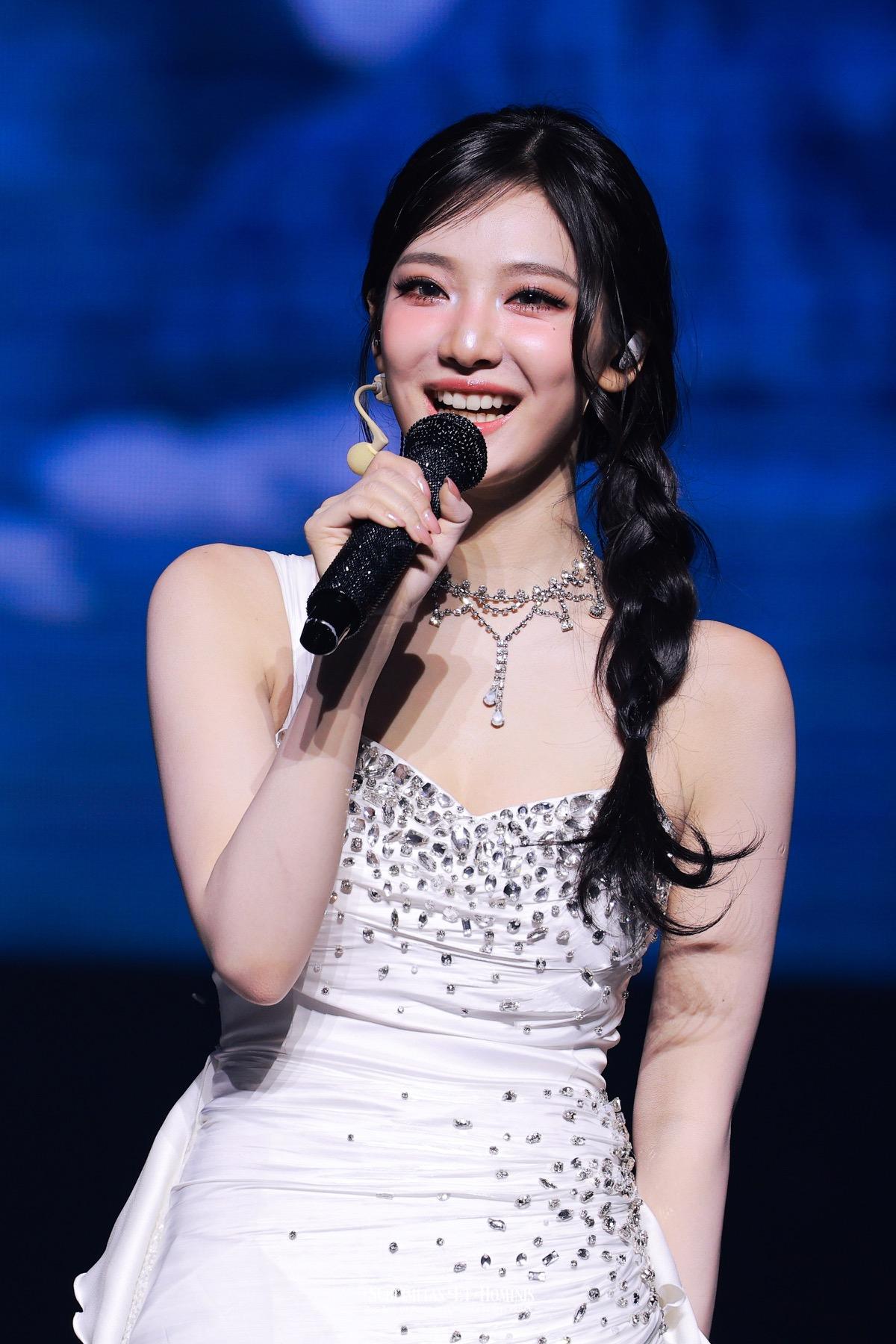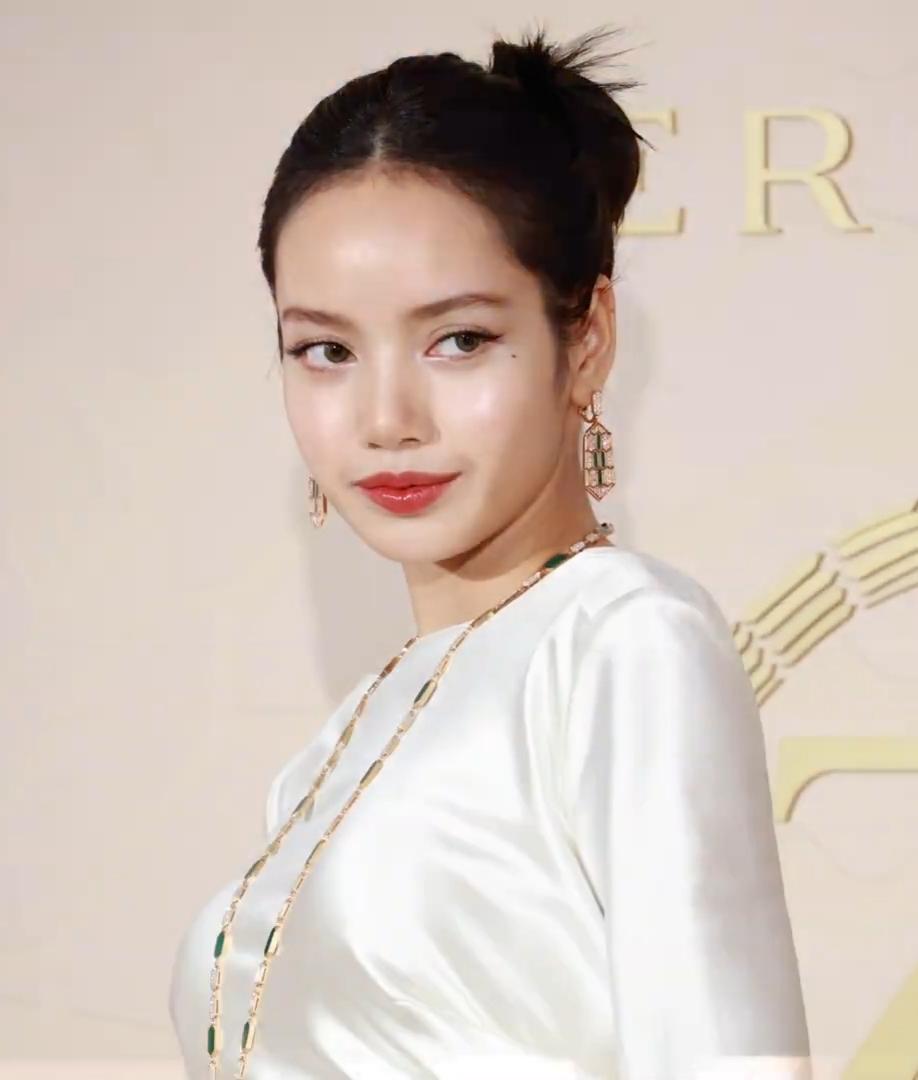
In September 2023, Lisa of BLACKPINK, one of the most famous women in the world, headlined five performances at the Crazy Horse in Paris, a burlesque cabaret known for stylized, semi-nude choreography. Weeks later, her verified account on Weibo, China's largest social platform, disappeared. In its place was a notice that the account had "received complaints of breaches of law and regulations."
The internet split in two. One side called the shows a betrayal of young fans. The other called the backlash prudish, hypocritical, even censorious. On Weibo, CNN reported, one user asked why a star with "very good resources" would choose the Crazy Horse at all. Another wrote: "I may have also criticized her for the Crazy Horse show. But that doesn't mean she should be banned."
Both of those voices are worth hearing. But both, in a way, ask the wrong question. The question is not whether one woman should be punished. It is what kind of culture produces this moment, profits from it, and then argues about it, and what part every one of us plays in that culture.
This essay is not about Lisa's soul. Only God sees that, and I have no business guessing at it. It is about the machine she works inside, and the gaze that machine is built to feed.
From Buriram to Seoul
Lisa was born Pranpriya Manobal on March 27, 1997, in Buriram province, in northeastern Thailand. In 2010, at thirteen, she auditioned for YG Entertainment in Thailand. Around four thousand people tried out. She was the only one who qualified.
In 2011 she moved to South Korea, the label's first trainee without Korean heritage, and spent the next five years training. She debuted with BLACKPINK on August 8, 2016, with "Boombayah" and "Whistle."
What followed was one of the most successful runs in pop history. BLACKPINK became the first K-pop girl group to play Coachella in 2019 and, in 2023, the first Asian act to headline it. Born Pink topped the Billboard 200. The Born Pink World Tour grossed about $330 million. In 2026 the group became the first artist on YouTube to pass 100 million subscribers.
Lisa's own career has been just as large. Her 2021 solo debut, Lalisa, set a record for the most-viewed music video by a soloist in its first twenty-four hours. "Money" became a global hit. In 2024 she founded her own company, LLOUD, and signed a partnership with RCA Records that gave her full ownership of her recordings. She released "Rockstar," "New Woman" with Rosalía, and the album Alter Ego, acted in the third season of HBO's The White Lotus, and in 2026 headlined the opening ceremony of the FIFA World Cup in Los Angeles.
None of that is in question. She is enormously talented, famously hardworking, and has opened doors for Thai and Southeast Asian artists that were closed for generations.
It is precisely because she matters so much that the question of how she is presented matters too.
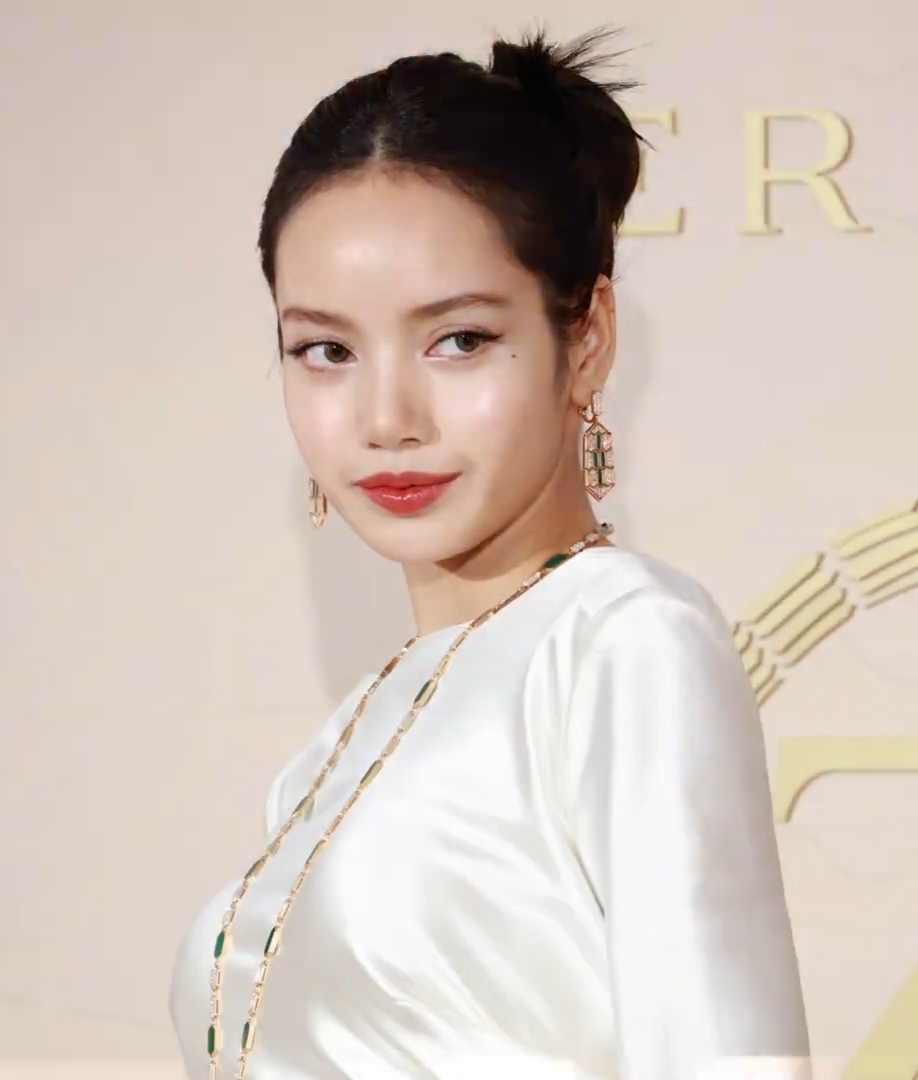
Lisa at a Bulgari photocall, June 2023. Photo: Ten Asia, CC BY 3.0, via Wikimedia Commons.
The "Girl Crush" Economy
From the beginning, BLACKPINK was marketed around what the K-pop industry calls a "girl crush" concept: confident, fierce, self-possessed women rather than sweet ingénues. Insider once summed up the group's appeal as "confidence, sexiness, and inspirational assurance."
On paper, that sounds like progress. Girl crush was sold as an alternative to the cute, childlike image that had dominated girl groups for years, in which grown women were styled to look like schoolgirls. And for many young fans, BLACKPINK's swagger genuinely was a picture of strength.
But notice which word sits in the middle of that list. Confidence and assurance are virtues. "Sexiness" is a market. The industry learned long ago that it can repackage the same old product, the female body offered to an audience, under a new label: not submission this time, but empowerment.
This is not unique to K-pop. It runs through Western pop, fashion, advertising, and streaming. The script is familiar: a young woman is trained from her early teens, styled by others, choreographed by others, and marketed by others. Then, when the image becomes more explicit, it is described as her choice, her liberation, her taking ownership.
Sometimes that is partly true. Lisa does now own her recordings and run her own company, and that is a real and admirable achievement. But we should be honest that "empowerment" has also become one of the most effective sales words in entertainment. A culture that sells sexual display back to women as freedom has not freed anyone. It has only found a more flattering name for an old transaction.
What Happened at the Crazy Horse
Crazy Horse is not a seedy club. It is a famous Parisian institution. Lisa's appearance there was a high-fashion, high-production event, featuring numbers with titles like "But I Am a Good Girl."
Still, the context matters. Lisa has tens of millions of followers, and many of them are young people who grew up with BLACKPINK on their phones. For a star with that reach, headlining a burlesque cabaret is not a neutral artistic choice. It is a signal, amplified by every clip shared online, about what a successful woman does with her body when the cameras are on.
I think it was a mistake. I say that not because the human body is shameful, but because it isn't. It is too valuable to be reduced to spectacle, and the young people watching deserve a different story about what it is for.
At the same time, the reaction raises its own troubling questions. No official reason was ever given for the removal of her Weibo account. China's tech platforms routinely remove content that breaks the country's censorship rules or simply attracts too much controversy, and the episode came amid a broader government crackdown on celebrity fan culture. A government erasing a woman's public presence without explanation is not a model of moral seriousness either. Criticizing a performance is one thing. Silencing a person is another.
What the Church Actually Says
The Catholic Church is often caricatured as being embarrassed by the body. The opposite is true. Pope St. John Paul II spent years of Wednesday audiences on what became known as the Theology of the Body, arguing that the body is not a shell or a costume but a revelation of the person. "The body, and it alone," he taught, "is capable of making visible what is invisible: the spiritual and the divine."
If that is true, then the body is never just merchandise. That is why the Church speaks about modesty, not as a list of hemlines, but as a protection of the person:
"Modesty protects the intimate center of the person. It means refusing to unveil what should remain hidden."
Catechism of the Catholic Church, 2521
And strikingly, when the Catechism describes what modesty protests against, it does not point at individual women. It points at us, and at the industries we support. Modesty, it says, "protests, for example, against the voyeuristic explorations of the human body in certain advertisements, or against the solicitations of certain media that go too far in the exhibition of intimate things" (CCC 2523).
The target is the voyeuristic system: the advertisement, the media, the gaze. That is the right target here too.
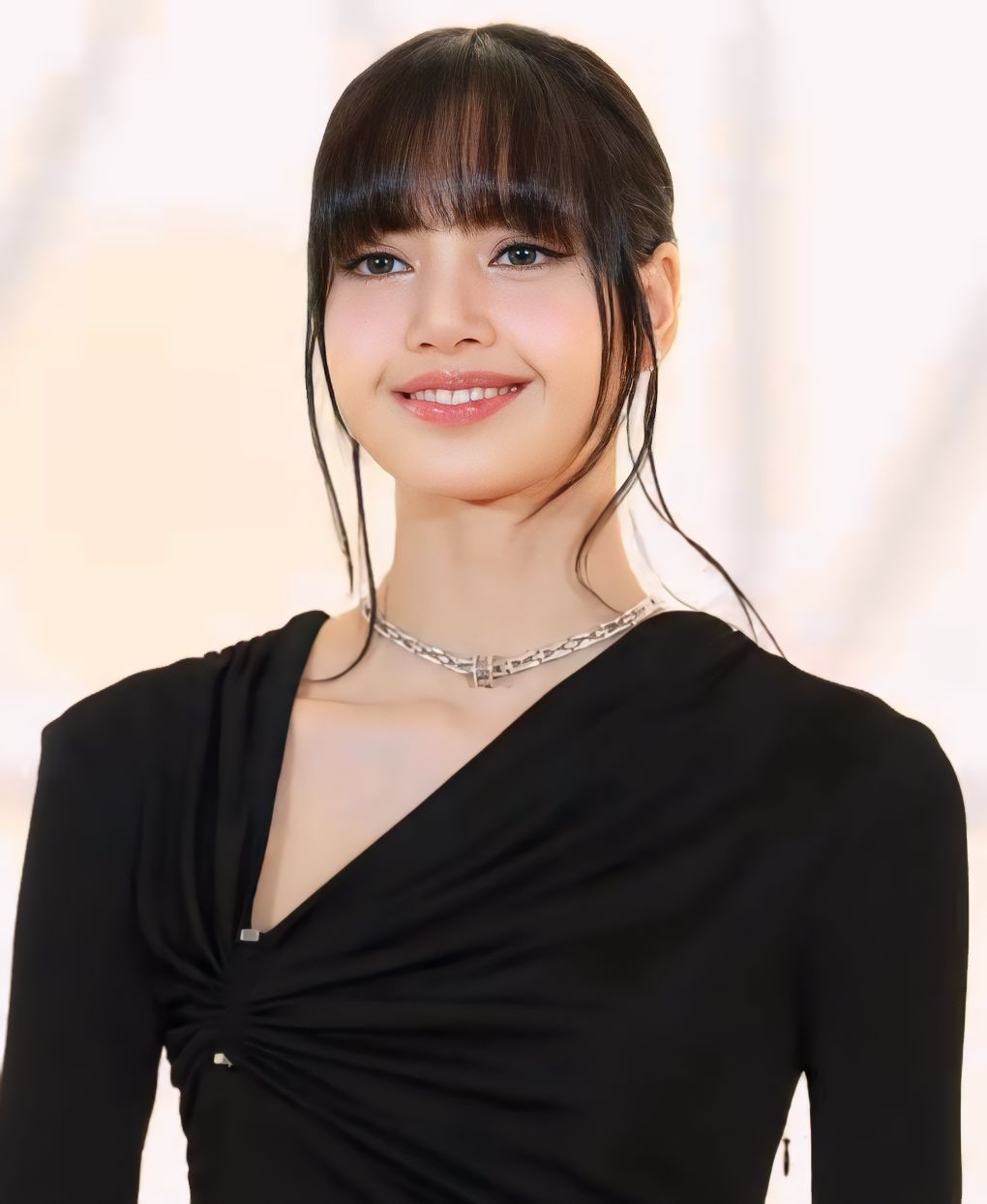
Lisa at a Bulgari Studio event, March 2024. Photo: K-POPIT 케이팝잇, CC BY 3.0, via Wikimedia Commons.
The Problem Is the Gaze
Jesus said something that should unsettle every one of us who consumes popular culture:
"But I say to you that everyone who looks at a woman with lust has already committed adultery with her in his heart."
Matthew 5:28
Notice whose heart He is talking about. Not the woman being looked at. The one doing the looking.
It is easy to write an essay condemning a celebrity. It is much harder to admit that sexualized performance exists because it works, because people click, stream, share, and pay for it. Labels and luxury brands are not charities. They invest in what audiences reward. If girl groups are styled more provocatively every year, it is because the numbers tell executives that this is what we want.
That means the most honest response to the Crazy Horse controversy is not to point at Lisa. It is to look at our own screens. What do I click on? What do I let my children watch on loop? What do I share, and why? Do I treat the women I see in music videos and on red carpets as persons, or as images to consume and then discard?
Freedom Is More Than Exposure
The modern world tends to define freedom as the absence of limits: the freedom to show anything, sell anything, become anything. Christianity has always offered a different definition. Freedom is the capacity to become fully who you are, to live in a way that matches your dignity.
By that measure, a culture that pushes young women toward ever more explicit performance is not giving them more freedom. It is narrowing the range of ways they are allowed to be seen, and quietly teaching that their value lies in being looked at.
Lisa's career already contains so much else worth celebrating: discipline, joy, humor, extraordinary dance, the courage to leave home at thirteen, and the business sense to own her own work. Those are the things I hope the industry will build around, and the things I hope her young fans will remember.
What We Can Do
None of us runs a record label. But all of us are part of the market. A few simple practices can make a difference:
- Reward talent, not exposure. Stream, share, and buy the work that shows what artists can do, not just what they reveal.
- Watch with your children. Know what is on their screens, and talk with them about how women are portrayed and why.
- Refuse the pile-on. Criticize choices and systems, not persons. No one is helped by cruelty or by censorship.
- Examine your own gaze. Ask honestly whether the media you consume trains you to see people as persons or as products.
- Pray for artists. Fame is a heavy burden, especially for those who entered it as children. Pray for their protection, their peace, and their freedom.
Seeing Rightly
The story of the Crazy Horse controversy is usually told as a contest between a star and her critics. But the deeper story is about all of us: a global audience that has learned to reward the exhibition of women's bodies, and an industry that has learned to call that reward empowerment.
Lisa is not the problem. She is a talented young woman working inside a system much bigger than she is, a system we built with our attention. Changing it starts where Jesus said sin starts: not on the stage, but in the heart of the one who is watching.
The Lord looks on the heart. The least we can do is learn to look on each other the same way.
Cover photo: Lisa at a Bulgari photocall, June 2023, by Ten Asia, CC BY 3.0, via Wikimedia Commons. Sources include CNN's reporting on the Weibo suspension (November 1, 2023) and public reporting compiled on Wikipedia.